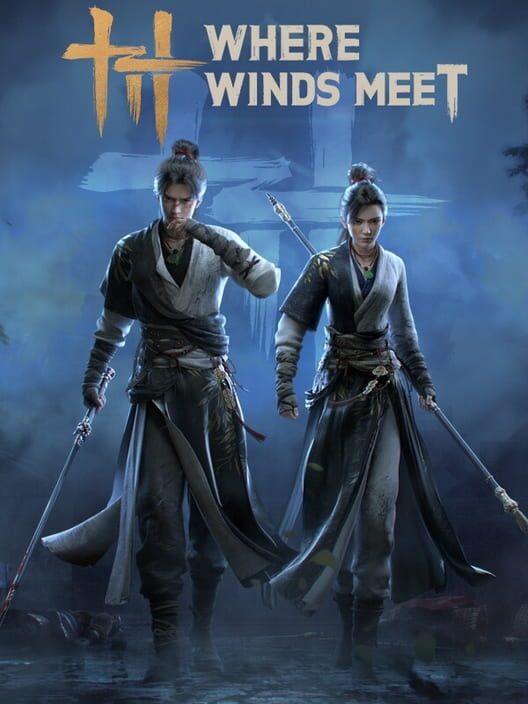
Where Winds Meet offers a visually stunning and immersive open-world experience set in 10th-century China, featuring a deep combat system with a variety of weapons and customizable playstyles, alongside a rich narrative filled with memorable moments and side stories. Despite some technical issues and inconsistent art quality, the game's vast, detailed world and engaging activities provide a highly replayable experience.
Better than 87% of games for Technical Polish
Better than 83% of games for Replayability
Better than 80% of games for Microtransactions
Top Aspects
Despite being a free-to-play game, the technical polish is impressive, with no loading screens, seamless traversal, and a highly interactive world.
The combat system in this game is widely praised for its variety, style, and depth. Reviewers commend the flashy animations, distinct combat styles, and the ability to customize playstyles through skill points. The system's variety is highlighted by the inclusion of multiple weapons, each with unique abilities, and the option to switch weapons mid-combo. The combat is also noted for its weight and responsiveness, drawing inspiration from Souls-like games with its lock-on stamina and stagger system. However, there are points of contention, such as finicky controls, unsatisfying parry timing, and some rough edges like a centered lock-on camera and janky aerial combat. Despite these issues, the combat becomes more engaging at higher difficulties, and the inclusion of multiple difficulty levels and an auto parry option adds to the overall satisfaction. While some reviewers appreciate the timing precision and strategy required, others feel it lacks the fast-paced, flashy elements found in other action games.
The game demonstrates a high degree of replayability, as evidenced by multiple assessments. Players are likely to find value in its extensive content and variety, particularly in the multiplayer, co-op, and side quest aspects. The game's ambitious design, which includes a wide range of experiences through online roles and unique mechanics, further supports its replay value. Additionally, the regular addition of new content ensures that players can enjoy hours of gameplay without the need for additional purchases. While all assessments agree on the game's replayability, the emphasis on free-to-play accessibility and continuous updates is a point of particular agreement.
The game's microtransactions are primarily focused on cosmetic elements such as outfits, mounts, and visual customization, which both assessments agree are non-essential and do not provide a competitive advantage, thus avoiding the pay-to-win scenario. Assessment 1 emphasizes the restraint in these microtransactions, while Assessment 2 highlights the additional structure of a battle pass and the praiseworthy commitment to releasing future downloadable content for free. Both assessments concur on the game's fair approach to monetization.
The game offers a detailed character creator with extensive options for customization, including facial features, gender, and appearance. Characters are fully voice-acted and have animated facial expressions, making them feel more lifelike.
The performance of the game presents a mixed picture. Assessment 1 highlights significant technical issues and inconsistencies, which can be frustrating for players, and notes the substantial download size of 111 gigs. Conversely, Assessment 2 reports that the game runs smoothly with high frame rates, even in densely populated areas, although it acknowledges slight drops in FPS in massive cities. While there is agreement on the game's ability to handle high-density environments, the presence of technical issues and the large download size remain points of contention.
The art style of the game is widely praised for its visual appeal, particularly in well-lit environments, where it shines with a unique and immersive aesthetic. This is largely due to the successful blending of traditional Chinese architecture with fantasy elements, as noted in one assessment. However, there are points of contention regarding consistency; while some reviewers highlight the stunning visuals, others point out areas where the art style falls short, leading to an inconsistent visual experience. Overall, the game's art style is seen as a strong point, though it is not without its flaws.
The game's story, set in 10th century China during the Five Dynasties and Ten Kingdoms period, follows a young swords master on a quest to recover a stolen medallion and find their missing uncle. While the main narrative is criticized for its uneven quality and poor English localization, which detracts from its emotional impact, it is praised for its memorable moments and characters. Side stories are highlighted as better written and more engaging, offering a variety of interesting narratives. The narrative balances high-stakes moments with overdramatic and goofy ones typical of the wuxia genre, blending traditional Chinese martial arts with fantasy and providing a rich cultural experience and philosophical depth. However, the story's urgency is often diminished by the game's many distractions.
The open world of 'Open World' is widely praised for its vastness and visual splendor, with all assessments agreeing on the impressive scale and variety of environments. Assessment 1 and Assessment 2 both highlight the staggering variety of encounters and activities, though Assessment 1 notes inconsistencies in quality and production value. Assessment 2 and Assessment 3 commend the balanced approach to exploration, with Assessment 3 specifically mentioning the absence of loading screens and the presence of seamless traversal options. Additionally, Assessment 3 details the game's highly interactive NPCs and their impact on gameplay. While there is general agreement on the richness and immersiveness of the open world, there is a slight divergence in the perception of consistency in quality, with Assessment 1 pointing out undercooked areas.
Online mode adds a social layer with activities like playing music, wrestling, solving puzzles, fishing, and performing for others, along with cooperative and competitive guild activities.
If you liked this, try:
How It Compares
Like Borderlands 4, but stronger in Open World, Combat System, Story
Like Escape from Tarkov, but stronger in Replayability
Like Path of Exile 2, but stronger in Character Customization, Microtransactions, Technical Polish