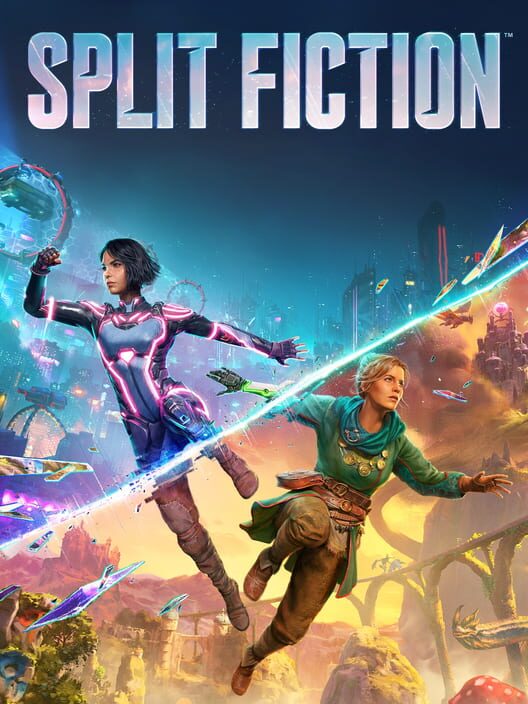
Split Fiction is a captivating adventure where two young authors navigate a virtual world, blending fantasy and sci-fi genres. With its diverse gameplay styles, stunning art, and engaging narrative, the game offers a unique and immersive experience that critiques the commodification of art by tech companies. Players will enjoy the seamless transitions between different genres, memorable boss encounters, and the necessity of teamwork in its co-op design.
Better than 93% of games for Narrative Elements
Better than 90% of games for Art Style
Better than 89% of games for Creative Attributes
Top Aspects
The narrative follows two young authors trapped in a virtual world, blending fantasy and sci-fi genres. The story is engaging, with a unique premise that critiques the commodification of art by tech companies. The characters, Zoe and Mio, are well-developed and their contrasting personalities add depth to the story.
The game boasts a visually captivating art style that seamlessly integrates fantasy and sci-fi elements, creating a richly detailed and immersive experience. Both assessments agree on the game's vibrant colors and imaginative designs, which enhance the storytelling. Assessment 1 emphasizes the polished visual effects and animations, while Assessment 2 highlights the game's ability to alternate between sci-fi and fantasy themes, effectively complementing the narrative shifts between chapters. This thematic diversity is seen as a strength that enriches the player's journey.
Split Fiction stands out for its imaginative and varied gameplay styles, seamlessly transitioning between different genres. The level design is diverse, with each level offering unique challenges and aesthetics. The final level is particularly memorable, showcasing the game's ability to deliver a spectacular and absorbing experience.
The game demonstrates impressive technical polish and performance, handling complex sequences, massive levels, and constant perspective shifts without noticeable technical issues, according to one assessment. Another review highlights the game's well-optimized nature with no frame dips. However, this review also notes a specific bug in a QuickTime event that can be frustrating for players, indicating a minor area for potential improvement.
The game demonstrates a high level of replayability, as evidenced by multiple assessments. Key factors contributing to this include its varied gameplay styles and systems, which encourage players to explore different mechanics and story paths. Additionally, the option to skip checkpoints and the engaging narrative, which necessitates communication and collaboration with a partner, further enhance the game's replay value. Co-op mechanics and optional side stories also play a significant role, allowing players to discover new elements on subsequent playthroughs. While there is broad agreement on these points, the assessments slightly differ in their emphasis, with some highlighting the narrative and collaborative aspects more than others.
The game's pacing generally receives positive feedback, though there are some minor discrepancies. Assessment 1 notes that while the pacing is not flawless, with certain sections dragging, the introduction of new mechanics and settings helps maintain excitement and engagement. Conversely, Assessment 2 praises the pacing as well-managed, highlighting careful transitions between different gameplay mechanics and side quests, which ensures a smooth and engaging experience. Overall, the consensus is that the pacing is effective, though some sections may feel slower than others.
The game offers a variety of inventive and evolving co-op puzzle mechanics that keep players engaged and constantly on their toes.
The gameplay of this game is highly regarded for its variety and creativity, with both assessments highlighting the constant shifts in perspective, mechanics, and genres. Assessment 1 emphasizes the frequent changes that keep the experience fresh and engaging, while Assessment 2 specifically notes that each chapter introduces a unique gameplay system or mechanic, requiring players to adapt and relearn frequently. Both assessments agree that this variety contributes significantly to the game's entertainment value, though Assessment 1 provides a broader view of the gameplay's creativity, while Assessment 2 focuses more on the structured adaptation required by the unique systems in each chapter.
The characters start as strangers and gradually develop a close friendship, which is reflected in the evolving dialogue and interactions throughout the game.
All boss encounters are highly praised, receiving a perfect score of 10 out of 10 for their design and challenge.
If you liked this, try:
How It Compares
Like EA Sports FC 25, but stronger in Narrative Elements, Creative Attributes, Replayability
Like Schedule I, but stronger in Technical Qualities, Art Style, Replayability
Like Path of Exile 2, but stronger in Boss Design